British Racing Green, Italian Red: Where Do These Colors Come From?
From the Gordon Bennett Cup to the sponsors of 1968: how green, red and white became the colors of nations, and what is known about their origin.
Published November 18, 2026 · Facts checked November 18, 2026
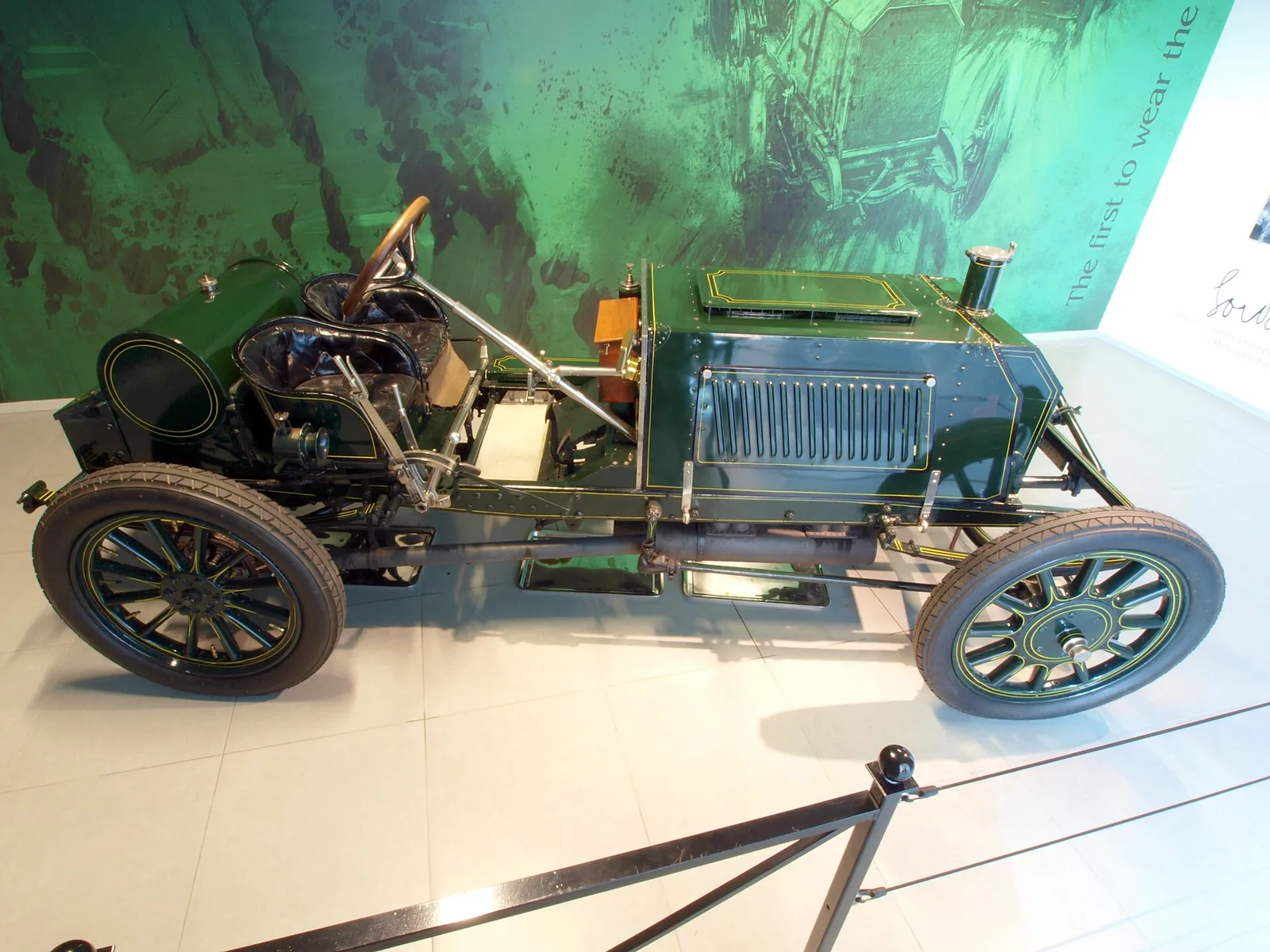
Ireland, Thursday, July 2, 1903, 7 a.m. Selwyn Edge, the Englishman who won the previous edition at the wheel of a Napier, sets off first in the Gordon Bennett Cup, the race that then pits nations against one another. He wears a green cloth cap and a loose white raincoat. In April, an Irish newspaper, the Leinster Leader, had told its readers which cars they were about to see go by:
“Each nation will have its own distinguishing colours. English cars will be painted green in compliment to Ireland, German white, France blue and America red, so that spectators will be easily able to distinguish the car’s nationality, however fast they dash by.” Leinster Leader, April 11, 1903
National Colors, Not Brand Colors
British racing green and Italian red became national colors in a race where nations competed against one another. British green was announced there in 1903, then noted at the 1904 and 1905 weigh-ins. Red took longer to become Italian. For both, the exact reason for the choice is still debated.
In 1899, James Gordon Bennett, owner of the New York Herald, offered the Automobile Club de France a trophy to be contested every year between national automobile clubs. The entrants are clubs, not drivers, and each car must be built entirely in the country whose colors it carries.
In 1898, for Paris-Bordeaux, the team’s three Panhards were blue, white and red. A Motor Sport columnist who signed himself Baladeur thought in 1948 that he could see the seed of a French flag in it; the same magazine had written in 1932 that none of the three drivers was thinking of representing a country. National colors arrive only with the 1900 Cup.
1900: Red Is American
The first Cup starts from Paris toward Lyon on June 14, 1900. The day before, the European edition of the New York Herald describes the entrants and their colors: the Belgians are in yellow, and red is the color of the car of the American, Winton. Italy is not at the start.
Great Britain, absent from this first Cup, had been given nothing. Baladeur noted it:
“No colour, of course, was allocated to Great Britain, and the famous green was still going a’ begging.” Baladeur, Motor Sport, November 1948
Green, Before Ireland
Green was on the road before it was British, and on a French car. In 1901, Charles Jarrott, who will race for Great Britain in the 1903 Cup, goes to Paris to pick up a Panhard for the Paris-Berlin race. He told the story in a book, quoted by Motor Sport in 1948:
“I noted particularly that the car was painted green—a beautiful rich, dark colour, which gave the car such a handsome appearance […]” Charles Jarrott, quoted in Motor Sport, November 1948
At Panhard, they explain why: he was given number 13, which nobody wanted, and green, a lucky color in France, was meant to ward off the bad luck. Jarrott’s green is a French green.
The next year, Edge wins the 1902 Cup, from Paris to Innsbruck, in a Napier: he is the only finisher and brings the trophy back to England. The historian Leif Snellman describes his car as painted in a shade of green, perhaps at Jarrott’s suggestion. Baladeur, for his part, had found no trace of its color in 1902; a year earlier, at Paris-Bordeaux, the Napier was red.
In the fall of 1902, Count Eliot Zborowski goes to scout a circuit in Ireland. According to Bill Boddy, a journalist at Motor Sport, in 1987, he then asks Napier to paint its race cars green, as a tribute to the Irish. In 2003, the same Boddy sees it as no more than hearsay. Green for Ireland is the most common explanation in recent accounts, but the Leinster Leader was saying what was planned, not what had been seen.
1903: A Belgian in German White
Unloaded in Dublin, the French Panhards and the Mors are blue, notes the weekly The Automobile. The Belgian Camille Jenatzy starts in a Mercedes painted white, writes Motor Age. He wins for Germany, notes The Automobile. The color belongs to the club that enters the car, not to the driver’s passport.
The rule will last. As late as 1960, the American magazine Road & Track reminds readers that the color is that of the entrant’s nationality: a Ferrari owned by an Englishman would be painted green.
Italy in Black, Then in Red
Italy comes into the Cup in black: it races that way in 1904 and 1905. At the 1905 weigh-in, in the Auvergne, where each car is recorded with its color, the Fiat driven by Lancia is listed as black, in the historian Hans Etzrodt’s record.
| Year | France | Great Britain | Germany | Italy | United States |
|---|---|---|---|---|---|
| 1900 | blue | absent | white | absent | red |
| 1904 and 1905 | blue | green | white | black | red |
| 1907 | blue | green | white | red | red and white |
The Cup ends in 1905. At the first Grand Prix of the Automobile Club de France, near Le Mans in 1906, the rules no longer require colors. At the 1907 Grand Prix, Etzrodt sees those of the Cup return, with a novelty: red is now assigned to Italy, and the United States switches to red and white.
In 2004, La Gazzetta dello Sport answered a reader that red, at first American, had passed to Italy in about two years, “for reasons that remain unknown” (RacingMind translation).
Original text: “per motivi rimasti ignoti”
1934: German White Becomes Silver
Germany, which raced in white, switched to silver, and that change has its legend. Alfred Neubauer, Mercedes’ team manager, tells it in his memoirs published in 1958: according to him, before the Eifelrennen in June 1934, at the Nürburgring, the Mercedes W25s weigh 751 kg (1,656 lb) against a limit of 750 kg (1,653 lb). During the night, their white paint is scraped off; the bare aluminum earns them the nickname “Silver Arrows.”
Leif Snellman and the website Jalopnik consider the story invented. The public only learns of it in 1958. The 1934 race was run under Formula Libre, with no weight limit. A week earlier, at the AVUS race in Berlin, the Auto Unions, the other German team, were already silver in the photos. And the nickname is said to have been coined on the radio as early as 1932, for Manfred von Brauchitsch’s streamlined Mercedes SSKL at the AVUS.
1964: Ferrari Gives Up Red
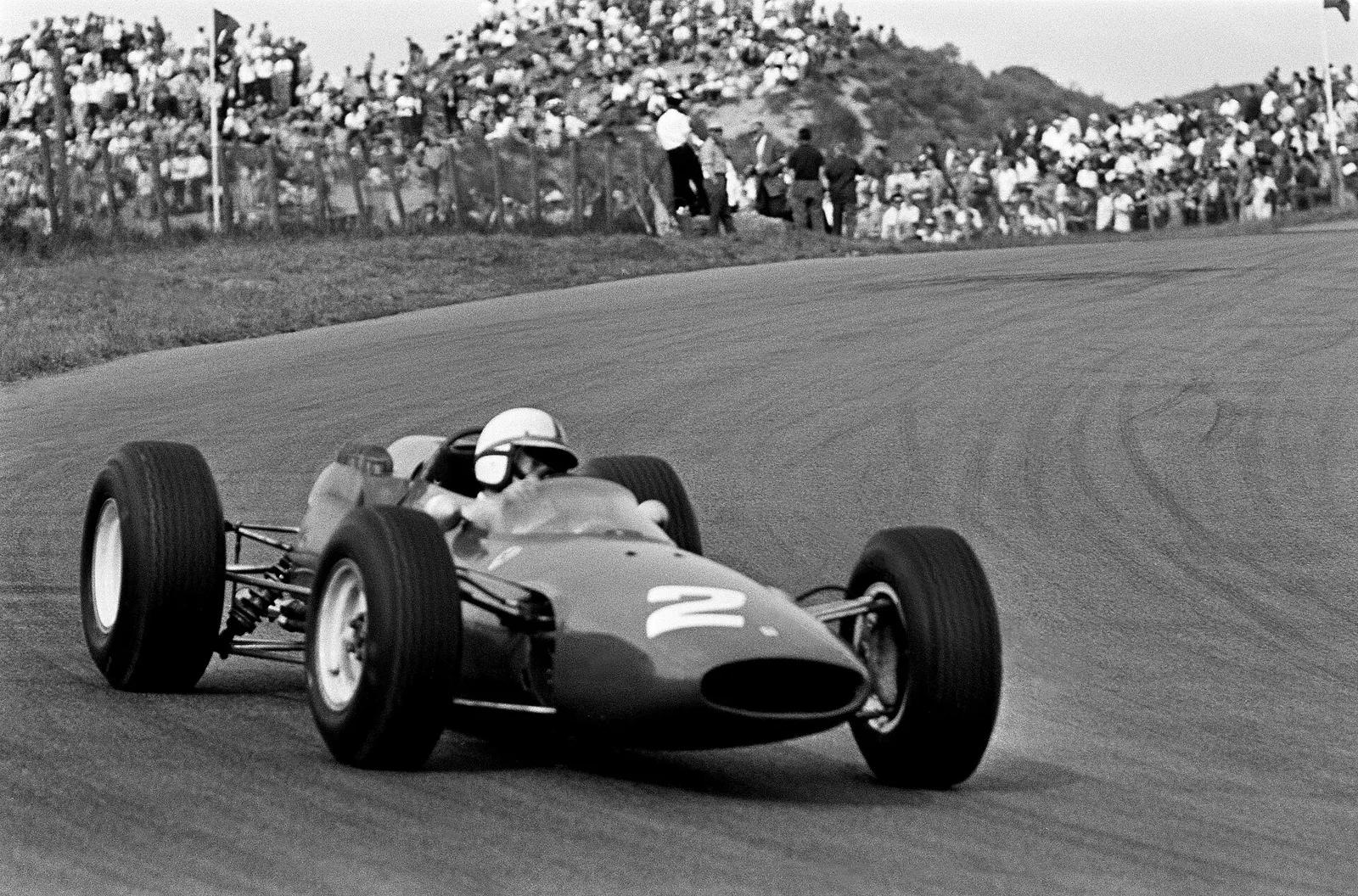
For Ferrari, red is the color of Italy, and Enzo Ferrari used it to protest. In 1964, he declares at Monza that he will never again race on Italian soil and hands back his entrant’s license. At the United States Grand Prix, at Watkins Glen, his cars are painted blue and white, the American colors: they are entered by the American team North American Racing Team. The threat never to race in red again did not hold.

1968: Advertising Arrives on the Cars
In early 1968, Article 127 of the FIA’s International Sporting Code still says:
“No advertisement or trade sign shall be carried on or distributed from any automobile during any competition, except with the special consent of the A.C.N. previously obtained.” FIA, Motor Sport Bulletin No. 8, February 1968
The A.C.N. is the Automobile-Club national, which holds sporting authority in its country. In January 1968, Motor Sport writes that the RAC, the British authority, now allows advertising on cars.
On January 1, 1968, at the South African Grand Prix at Kyalami, a private South African team enters a Brabham for John Love in the colors of its sponsor, a cigarette brand. In February, the FIA states in its bulletin that each national authority is “entirely free” to allow advertising, ban it or limit it. It also says why advertisers are arriving: big companies have pulled their advertising subsidies from racing, and several competitors, “and not the lesser ones,” have had to look to other advertisers to keep racing. The bulletin also announces the 1968 Sporting Year Book, one chapter of which covers flags, national colors and team colors. They are therefore still in the yearbook; on the cars, sponsors are starting to cover them.
Team Lotus, Colin Chapman’s team, won that same January 1 at Kyalami, with Jim Clark, in its green and yellow. It then heads to New Zealand for the Tasman Series, non-championship races. Clark races there at Pukekohe and then at Levin. In the week that follows, a sign painter in Christchurch covers his Lotus 49 in the red, white and gold of a cigarette brand. On January 20, 1968, Clark wins the Lady Wigram Trophy with it. On May 12, at Jarama, the Spanish Grand Prix is the first championship round in which Lotus races this way, and Graham Hill wins it.
For Jim Clark’s Lotus, Pukekohe and Levin will have been the last races in green and yellow.
FAQ
What is the exact shade of British racing green?
There isn’t one. In 1960, Road & Track wrote that British racing green is not a precise shade of green, even though Napier green was preferred. Depending on the era, it ranged from olive to a very dark green.
Could an Italian car race in green?
Yes, when the owner was British. In 1954, Stirling Moss had the Maserati 250F that his father got for him painted British racing green. In September, at the Italian Grand Prix, the factory took him under its wing, and the car was entirely red, except for a green band on the nose.
How many countries had a racing color?
Four in 1900, at the first Gordon Bennett Cup. According to the journalist Bill Boddy of Motor Sport, there were 26 assigned colors in 1936.
What was Austria’s color?
Black and yellow at the 1904 and 1905 Gordon Bennett Cups. In 1932, Motor Sport noted that the Austrians were supposed to race in white with a black chassis.
Keep exploring
Main sources
- To-morrow’s auto race, The New York Herald, édition européenne (13 juin 1900) — Motor Racing History (transcription)
- 1905 Gordon Bennett Cup Race (Hans Etzrodt) — Golden Era of GP Racing
- Bulletin sportif n° 8 (février 1968) — FIA, base historique