ArticlesIndyCar & NASCAR5 min read
Why Does the Indianapolis 500 Winner Drink Milk?
A 1936 bottle, a cup of water, a booed glass of orange juice: how milk became the Indianapolis 500 winner’s ritual.
Published November 18, 2026 · Facts checked November 18, 2026
Indianapolis, 1936. Louis Meyer has just won the Indianapolis 500 for the third time, after 1928 and 1933, something nobody had done before him. In Victory Lane, the enclosure where the champion is celebrated as soon as the race is over, he sits, exhausted, on his car, number 8. He holds up three fingers on his right hand and holds a bottle in his left. The scene is captured, and the Movietone newsreel announcer says:
“Somebody has given him a bottle of milk” […] “Well, that race would make anybody thirsty.” The newsreel announcer, 1936
Buttermilk, mistaken for milk
What Meyer is drinking is not milk. It is buttermilk, the liquid left over when cream is churned into butter. He has drunk it since childhood, in Yonkers, New York: his mother had convinced him it would cool him off on hot days. And on this day in 1936, it is hot.
What follows is the story handed down by the Speedway, as the Indianapolis Motor Speedway, the home of the Indy 500, is known. A dairy industry executive supposedly saw the footage of Meyer and enthusiastically asked that milk be made available to the winner every year. He had not realized the bottle held buttermilk. Donald Davidson, the Speedway historian, told the story on an Indiana farm radio show:
“Apparently, some executive in the in the milk industry saw that and thought, ‘You know? What great publicity!’” Donald Davidson, Hoosier Ag Today
According to this account, then, the winner drinks milk because a dairy executive was wrong about what was in a bottle, and then because the dairy industry paid to keep the gesture going.
Meyer himself always maintained that it all started in 1933, with his second win. The Speedway has no photographic proof of that, and notes that the 1934 and 1935 winners certainly did not drink milk.
Water in a silver goblet
After Meyer, milk takes hold, with no cash bonus at all: every winner drinks it from 1938 to 1941. The race then stops during World War II; when it resumes in 1946, the winner still drinks milk.
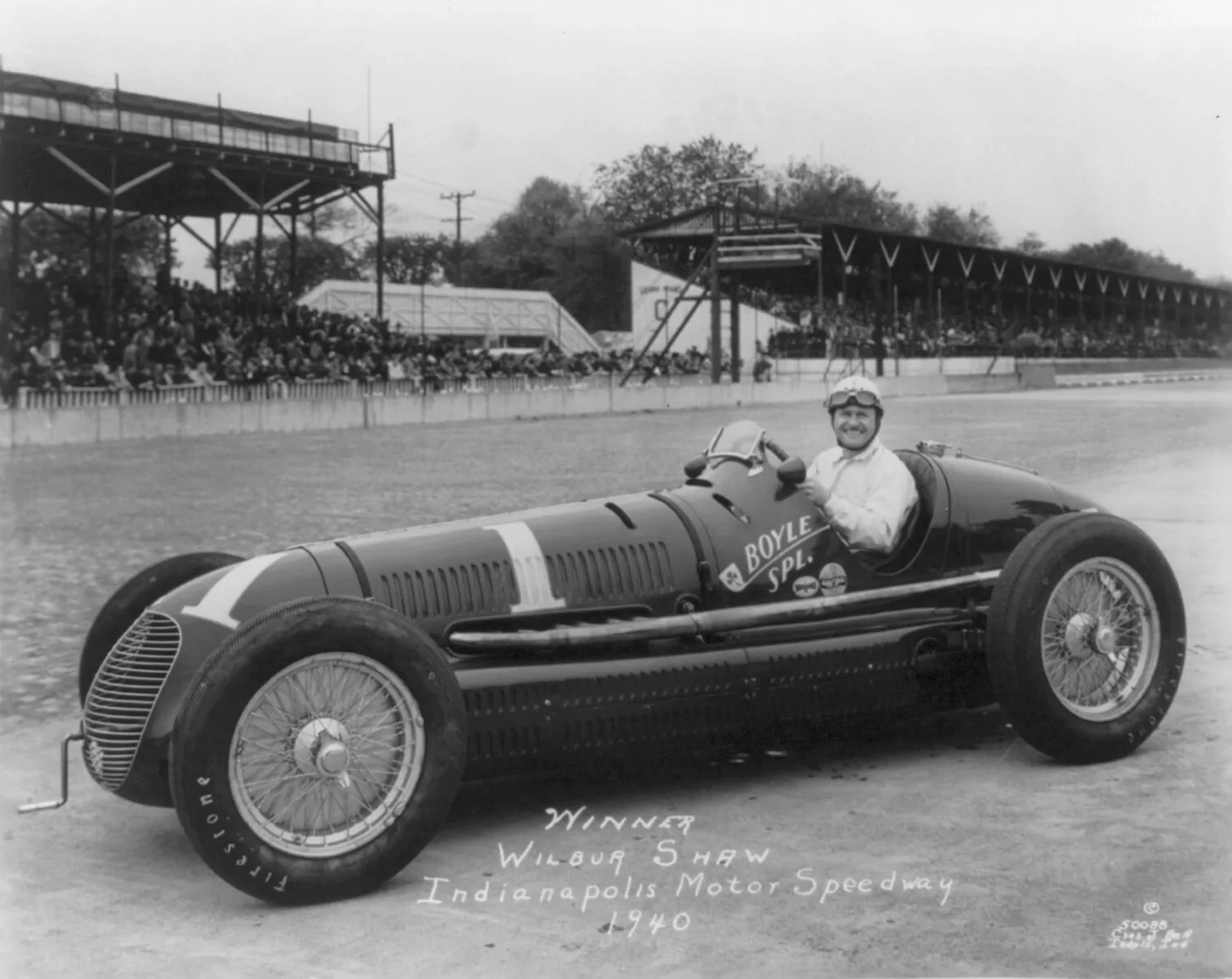
Then comes Wilbur Shaw. A three-time winner himself, in 1937, 1939 and 1940, he has become president and general manager of the Speedway. Starting in 1947, instead of milk, he is the one handing winners fresh water in a silver goblet engraved “Water from Wilbur.”
Shaw dies on October 30, 1954, in a private plane crash near Decatur, Indiana. His water outlives him: it is still served after he is gone, and milk does not return until 1956.
1956: the dairy industry adds a bonus
In May 1956, the dairy industry offers a bonus: $400 for the winner, provided he drinks milk in Victory Lane, and $50 more for his chief mechanic. On the Speedway’s website, Davidson writes $400; on the farm radio show, he said $300.
The 1956 winner, Pat Flaherty, has a mild calcium deficiency and drinks milk regularly. He takes a good swig of water from Shaw’s cup, empties a whole bottle of milk, then asks for a second. His two successors, Sam Hanks and Jimmy Bryan, also collect $400 for a sip or two. Shaw’s water is offered for two more years, then withdrawn: only the milk remains.
1993: Fittipaldi’s orange juice
In 1993, the winner is Emerson Fittipaldi. In Victory Lane, the Brazilian first drinks orange juice. He drinks the milk afterward, but the television cameras have already moved on to another interview. The Associated Press saw it as a publicity stunt for the orange groves he owned in his native Brazil.
Davidson remembers the crowd’s reaction:
“The crowd just boo’ed and boo’ed and boo’ed. And that was amazing because he was one of the most popular drivers.” Donald Davidson
Hundreds of calls pour into the office of the Indiana dairy association, the American Dairy Association, in Indianapolis. Two days after the race, Fittipaldi explains himself in a statement the association distributes:
“I am a Brazilian orange-juice producer, and for many years I have been toasting my racing victories with orange juice.” […] “At the Indianapolis 500 this year, I drank the milk after I had a little orange juice. I deeply regret the misunderstanding and inconvenience I caused for the American Dairy Association and the Indianapolis Motor Speedway.” Emerson Fittipaldi, 1993
He also announces that the $5,000 bonus the association usually gives the winner will go to charity. At the time, this donation seems to close the matter. The public’s memory, though, held on to the orange juice:
“That sort of defined his career. He won the world championship twice, won the 500 twice, but what does everybody remember? He didn’t drink the milk in 1993.” Donald Davidson
Who hands over the bottle today
The winner’s milk remains the business of the Indiana dairy association, the American Dairy Association Indiana, a nonprofit funded by the state’s dairy farm families. It has renewed a multiyear agreement with the Speedway. For the 100th running, in 2016, the two had even planned to have 100,000 spectators toast with the winner, with bottles of milk handed out in the main straight grandstands.
Before the race, the 33 drivers in the field tell the association their preference: skim milk, 2% milk, whole milk, or “no preference.” Meyer’s buttermilk is no longer among the choices, but some drivers write it in by hand anyway, just as others write in chocolate or strawberry.
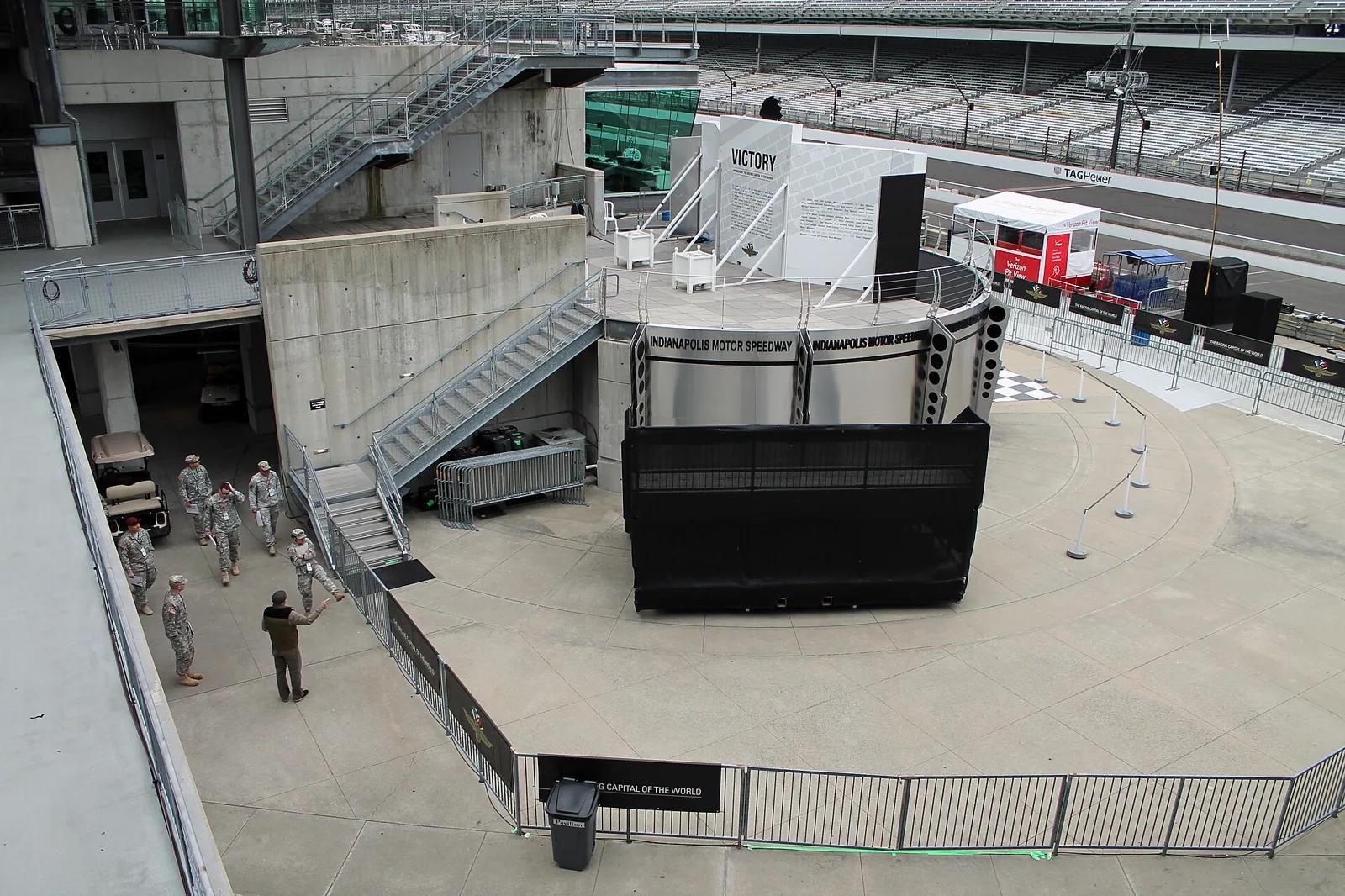
In Victory Lane, two Indiana dairy farmers wait. One hands the chilled bottle to the driver; the other brings theirs to the chief mechanic and the team owner. This second farmer, called the “rookie,” takes notes: he is the one who will hand the bottle to the winner the following year. Since the mid-2000s, this handoff by an Indiana dairy farmer has become a race-day ceremony in its own right.

On May 24, 2026, Felix Rosenqvist wins the closest race in Indianapolis 500 history, according to the Associated Press. He jumps onto his car, raises his arms, tastes the milk, then pours the rest over his head. Ninety years earlier, Louis Meyer had sat on his own car to drink his buttermilk.
FAQ
What kind of milk does the Indianapolis 500 winner drink?
Whatever he picked before the race. In 2026, 25 of the 33 drivers had asked for whole milk, 7 for 2% milk, and only one, Romain Grosjean, for skim. The winner, Felix Rosenqvist, had chosen whole.
How much does the winner get for drinking the milk?
In 2020, the Speedway wrote that recent winners had received $10,000 from the dairy industry. In 2022, the announced bonus was the same, with $500 for the chief mechanic.
Does the winner keep the bottle?
Yes, as one more trophy. It is a 32-ounce glass bottle, a bit under a liter, filled with Indiana milk. Before the presentation, the bottles wait in a cooler, in a suite, under the watch of a security officer.
Was Fittipaldi fined in 1993?
The 1993 newspapers talk about a lost bonus, not a fine. According to the Deseret News, the Indiana dairy association pulled the $5,000, and the chief mechanic’s $500 along with it.
Keep exploring
Main sources
- Milk (Where Tradition Never Stops) — Indianapolis Motor Speedway
- Indy 500 Traditions: Fan Favorite Milk Chug Was An Accident — Indianapolis Motor Speedway
- Fittipaldi Apologizes For Milk Snub, Donates Money To Charity — The Seattle Times