Why Did the Dakar Rally Leave Africa?
Four tourists killed on Christmas Eve, a warning from Paris, two versions from the organizer: it was all settled before the 2008 start.
Published November 18, 2026 · Facts checked November 18, 2026
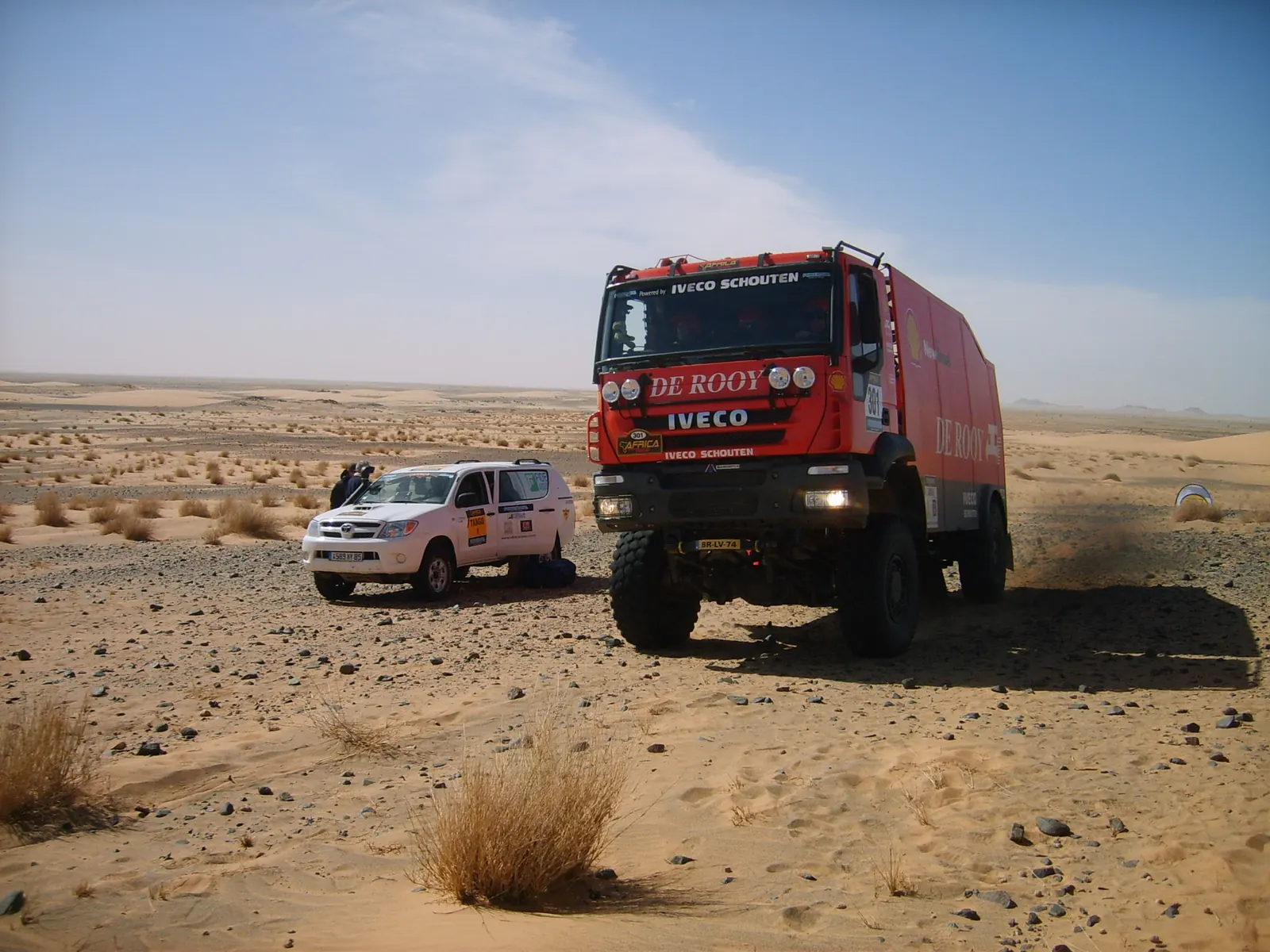
Lisbon, Friday, January 4, 2008, around midday. Étienne Lavigne, the director of the Dakar, reads a statement at a hastily called press conference. The Dakar, the rally raid for cars, motorcycles and trucks created in 1978, was supposed to leave the next day for the Senegalese capital. It will not take place. Some 2,500 people who came for the race are already in Lisbon. In 2009, the Dakar will be run in South America.
Eight Stages in Mauritania, Four Tourists Killed Near Aleg
The 2008 edition was to link Lisbon and Dakar from January 5 to 20. More than half the stages went through Mauritania: eight of fifteen, from January 11 to 19, with a rest day in the capital, Nouakchott.
On December 24, 2007, five French tourists are attacked by three armed men near Aleg, a town about 155 miles (250 km) east of Nouakchott. Four are killed; the fifth, wounded by gunfire, is evacuated to Dakar.
The next day, AFP spoke of an attempted robbery. The Mauritanian authorities then blamed the killings on Al-Qaeda in the Islamic Maghreb (AQIM), the name an Algerian armed group took in early 2007.
On December 29, 2007, a statement attributed to AQIM and posted on Islamist websites claims the deaths of Mauritanian soldiers. It also lashes out at the rally, which it calls neocolonialist, and at the Mauritanian government, which protects it. On January 2, 2008, according to Al Jazeera, the Mauritanian government judges that there is “not a single serious claim” linking the group to these attacks and does not rule out cross-border crime.
The organizer, Amaury Sport Organisation (ASO), does not give up, however. Its executives go to Nouakchott, where the authorities promise several thousand men, and decide to keep the Mauritanian stages. On January 4, Roger Kalmanovitz, ASO’s director of external relations and security, tells what happened next:
“A week ago, at this same hour, we were in Nouakchott, where the Mauritanian authorities gave us every assurance of security. Those assurances were validated by the French embassy. But the French Foreign Ministry stepped in, and it told us there was another form of threat.” Roger Kalmanovitz, Afrik.com, January 4, 2008 (RacingMind translation)
On January 3, Paris Advises Against Mauritania
On Thursday, January 3, Laurent Wauquiez, spokesman for the French government, announces that the Foreign Ministry “strongly advises all French citizens against traveling to Mauritania until further notice.” The warning also applies, he specifies, “to the organization of the Lisbon-Dakar rally” (RacingMind translation). On Friday, the foreign minister, Bernard Kouchner, repeats the message.
ASO’s statement, published that Friday, January 4, begins by invoking Paris: “After various exchanges with the French government—in particular the Foreign Ministry—and given its firm recommendations, the organizers of the Dakar have decided to cancel the 2008 edition of the rally […]” (RacingMind translation). It adds:
“Given the current international political tensions, the murder of four French tourists on December 24 linked to a branch of Al-Qaeda in the Islamic Maghreb, and above all the direct threats made against the race by terrorist movements, A.S.O. can see no other reasonable solution than to cancel the sporting event.” ASO statement, January 4, 2008 (RacingMind translation)
Questioned right after the announcement, Étienne Lavigne points to the state: “The French government invoked reason of state to formally recommend that we not start the Dakar.” He adds: “Reason of state cannot be explained and cannot be commented on.” (RacingMind translation)
In thirty years of existence, this is the first time the entire event has been canceled: until then, only stages had been.
“Direct Threats”: Two Versions at ASO
In the same interview, Kalmanovitz says something else:
“We did not receive any direct threats, but the Foreign Ministry explained to us that there were statements from AQIM […] that are not on the Internet and that threatened Mauritania, and by extension the rally.” Roger Kalmanovitz, Afrik.com, January 4, 2008 (RacingMind translation)
Étienne Lavigne, quoted by franceinfo, describes the same path of information. “I would add that Al-Qaeda in the Maghreb statements mentioned the Dakar. I don’t know what those statements say, but the Quai d’Orsay [the foreign ministry] has them.” (RacingMind translation)
ASO’s statement speaks of direct threats made against the race; its security director says ASO received none itself. Everything goes through Paris. AQIM texts would have targeted the race, the ministry would have them in hand, and ASO has not read them. One text, however, is public: the December 29 statement, which does mention the rally.
Mauritania disputes this. Its foreign minister, Babah Sidi Abdallah, says on RTL that “no new element justifies the fears expressed by the French officials,” according to the French version of the interview (RacingMind translation). The Mauritanian presidency regrets the decision.
ASO also rejects a shortened race, without Mauritania, in which eight stages out of fifteen would have disappeared. Kalmanovitz explains: “If we could not replace 17 days of racing with 17 days of racing, we preferred to cancel.” (RacingMind translation)
Not the First Alert: The 2000 Airlift
The Dakar had already had to work around a threat. In January 2000, the race is to link Dakar to Cairo. It is organized by TSO (Thierry Sabine Organisation), named for the founder of the event, a company ASO bought in 1992.
Alerted by American intelligence services, then by the Quai d’Orsay, TSO cuts four stages in Niger on January 11, citing a proven terrorist threat. The Nigerien authorities deny that the threat was real.
The race’s machines take to the air: three Antonov 124 cargo planes make nineteen rotations between Niamey, the capital of Niger, and Sebha, in Libya, to carry 155 cars, 76 trucks, 147 motorcycles and 8 helicopters.
In 2000, four stages had been dropped and the race had flown over a country. In 2008, eight stages out of fifteen were affected, and ASO preferred to cancel everything.
Heading for South America, With No Promise of Return
On February 11, 2008, Patrice Clerc, president of ASO, and Étienne Lavigne announce a 2009 Dakar in Argentina and Chile, scheduled for January 3 to 18. According to the statement, ASO had been in contact with those two countries for a few years. Lavigne then says: “The Dakar is visiting South America, but that does not mean it is leaving Africa.” (RacingMind translation) He does not rule out going back to Africa when the geopolitical context is more favorable.
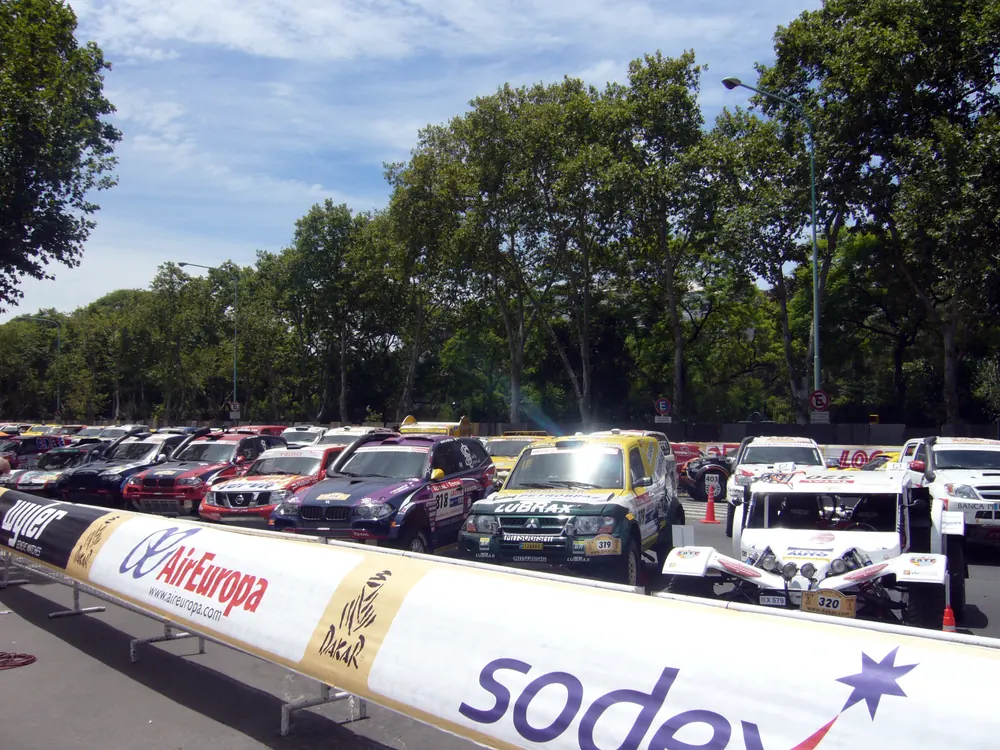

On January 2, 2009, on the eve of the first South American Dakar, the tone changes. Lavigne refuses to promise a return to Africa:
“The Dakar in the past has gone through Algeria, Niger, Libya, Chad ... and year by year, the territory for the race has been reduced. […] That’s a country we went to 30 times. I cannot take people to these countries.” Étienne Lavigne, Sapa-AFP news agency, January 2, 2009
In the part that was cut, he brings up the Al-Qaeda threat and the death of twelve Mauritanian soldiers in September 2008. That is the reason the Dakar’s director gives: he no longer wants to take people to these countries.
The Dakar stays in South America from 2009 to 2019. According to the Spanish news agency EFE, it leaves when the host countries pull out one by one: Chile in 2015 after natural disasters, Argentina in 2019 for budget reasons. In April 2019, ASO confirms the move of the Dakar to Saudi Arabia. The kingdom has hosted seven consecutive editions, from 2020 to 2026.
The Africa Race Stayed, the Dakar Plans a Detour in 2027
Hubert Auriol refuses to follow. A Dakar winner and former race director, he judges in February 2008, reports Caradisiac, that the Dakar is losing a little of its soul. With two other former winners, Jean-Louis Schlesser and René Metge, he launches the Africa Race, a race that stays in Africa.
After a symbolic start in Marseille on December 28, 2008, the Africa Race officially sets off from Nador, Morocco, on December 30. It reaches Lac Rose (Lake Retba), in Senegal, the traditional finish of the Paris-Dakar, on January 11, 2009, and Schlesser wins it in a car. In 2017, he told Le Figaro: “At the beginning, they took us for crazy people, for pariahs. It was mission impossible to launch a new race there right after the Dakar’s withdrawal.” (RacingMind translation)
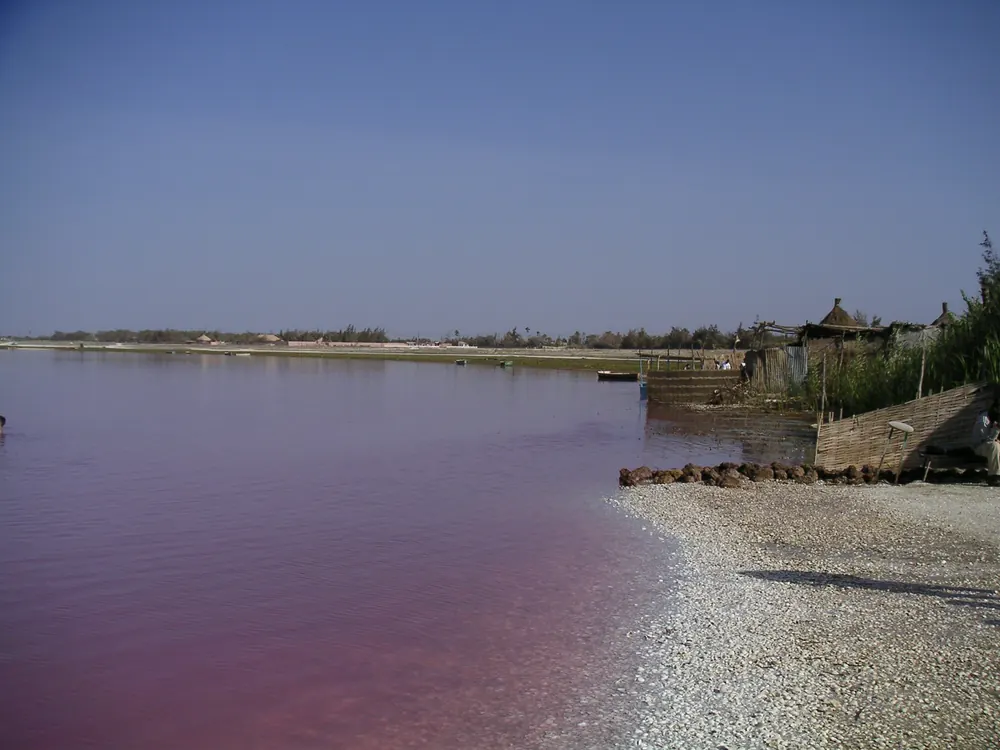

Having become the Africa Eco Race in 2010, it still crosses Mauritania. Its organizers say in 2017 that they have never received a threat. The same year, Lavigne, then director of the Dakar, says of Africa: “It’s still far too risky.” (RacingMind translation)
The Dakar, for its part, is due to return to Africa for one edition. On October 25, 2026, ASO and the Saudi Motorsport Company, its Saudi partner, announced that the 2027 Dakar would not be held in the kingdom “following recent events in the region” (RacingMind translation), without saying which. The statement calls the move exceptional and one-off: Saudi Arabia is to host the 50th edition in 2028.
Five days later, ASO unveiled the new route. The 2027 Dakar is to start on January 9 from Loulé-Faro, in the Algarve, Portugal, and finish on January 23 in Marrakech, Morocco, subject to approval by the World Motor Sport Council, a body of the Fédération Internationale de l’Automobile (FIA). It would be the Dakar’s first return to Africa since the 2007 edition. The Dakar’s director since 2019, David Castera, explains: “I thought it was a good thing for the Dakar to go back a little to its origins, that is, to set out from Europe and head toward the African continent.” (RacingMind translation)
The first Dakar set off from the Trocadéro, in Paris, on December 26, 1978, to arrive in Dakar on January 14, 1979. The 2027 edition is due to end in Marrakech, without going all the way to Senegal.
Read also: Why the FIA Banned Group B.
FAQ
Was the Dakar Rally the target of an attack in 2008?
No. The four French people killed near Aleg on December 24, 2007 were tourists on their way to Mali and Burkina Faso, with no connection to the rally.
Where was the 2009 Dakar run?
In Argentina and Chile, starting and finishing in Buenos Aires. The first South American Dakar was planned for 14 stages and 5,951 miles (9,578 km); it ended on January 17, 2009.
Why did the Dakar leave South America?
According to the news agency EFE, Chile, Bolivia, Paraguay and then Argentina pulled back one after another. In 2018, Étienne Lavigne explained that he could not predict the state of those countries’ economies a year ahead, and that he was looking for other host countries.
What will the 2027 Dakar look like?
After a prologue and a first special stage in the Algarve, Portugal, the route is to total 4,862 miles (7,824 km), including 2,697 miles (4,341 km) of special stages, with a rest day in Agadir.
Keep exploring
Main sources
- Dakar 2008 : l’épreuve annulée pour raison de sécurité — Le Petit Journal
- Le Dakar n’est pas mort (entretien avec Roger Kalmanovitz, 4 janvier 2008) — Afrik.com (archive Wayback Machine)
- Le Portugal et le Maroc accueillent exceptionnellement la 49ᵉ édition — Dakar (A.S.O.)